Websites.
I design and code company websites from scratch - no templates, no WordPress. You approve every screen before the code exists, you own the code, and you manage the site yourself from the panel.
Diagnosis
Where a company website loses money.
The three reasons clients come to me for a new site.
A template like half the industry
A marketplace theme looks familiar because twenty other companies wear the same skin. If nothing sets you apart, the customer compares the only thing left: the price.
Slow, therefore expensive
Every second of loading is customers walking away and a weaker signal to Google. A heavy plugin-laden site costs you traffic before anyone reads the offer.
Tied to your agency
Code on someone else's server, a licence on someone else's invoice, a panel on subscription. Changing agency stops being a decision and becomes rebuilding the site from scratch.
Process
How your site gets built.
Four stages and one person to talk to. At every step you know what is happening and what comes next.
The call
Fifteen free minutes about your business goal, not your favourite colour. You leave with a concrete quote and a date, or with an honest “this is not a project for me”.
The design
You see every screen before the first line of code exists. Changes are free at this stage - the expensive ones are those discovered at the end.
The code
I write the site from zero in Next.js, with no templates. You are not left out of the loop while I build - I come to you whenever something needs deciding, not at handover.
The launch
I move the site to production and teach you how to edit the content. I can take over hosting and maintenance - but that is your choice, and the code is yours the moment you ask for it.
What you get
A website you genuinely own.
Not a skin on someone else's system, but a fast, self-sufficient site with the code on your side.
Design before code
Before I code anything, you approve the look screen by screen. No surprises at handover, when a change costs the most.
Speed built into the architecture
Next.js renders content on the server, and the site carries only the code it actually needs. It opens fast on a phone and on a weak connection too.
A panel you can run yourself
In the CMS tier, Payload works like an editor you already know. Add a post, change a price, upload a photo - with no developer and no invoice for a trifle.
Integrations that need no clicking
The form goes to your CRM, a newsletter sign-up to your mailing tool, a booking to your calendar. I set it up once and it runs without you.
Why not a template
A template, or a site from me.
The same company website, two completely different stories over the years to come.
An off-the-shelf template
A site from me
Looks like half the industry
Designed for your company alone
Heavy with surplus plugins
Carries only the code it needs
Licences and subscriptions every year
The code is your property
An update can break it
One person answers for the whole thing
You write to an account manager
You write to the person who writes the code
Portfolio
Sites that are already working.
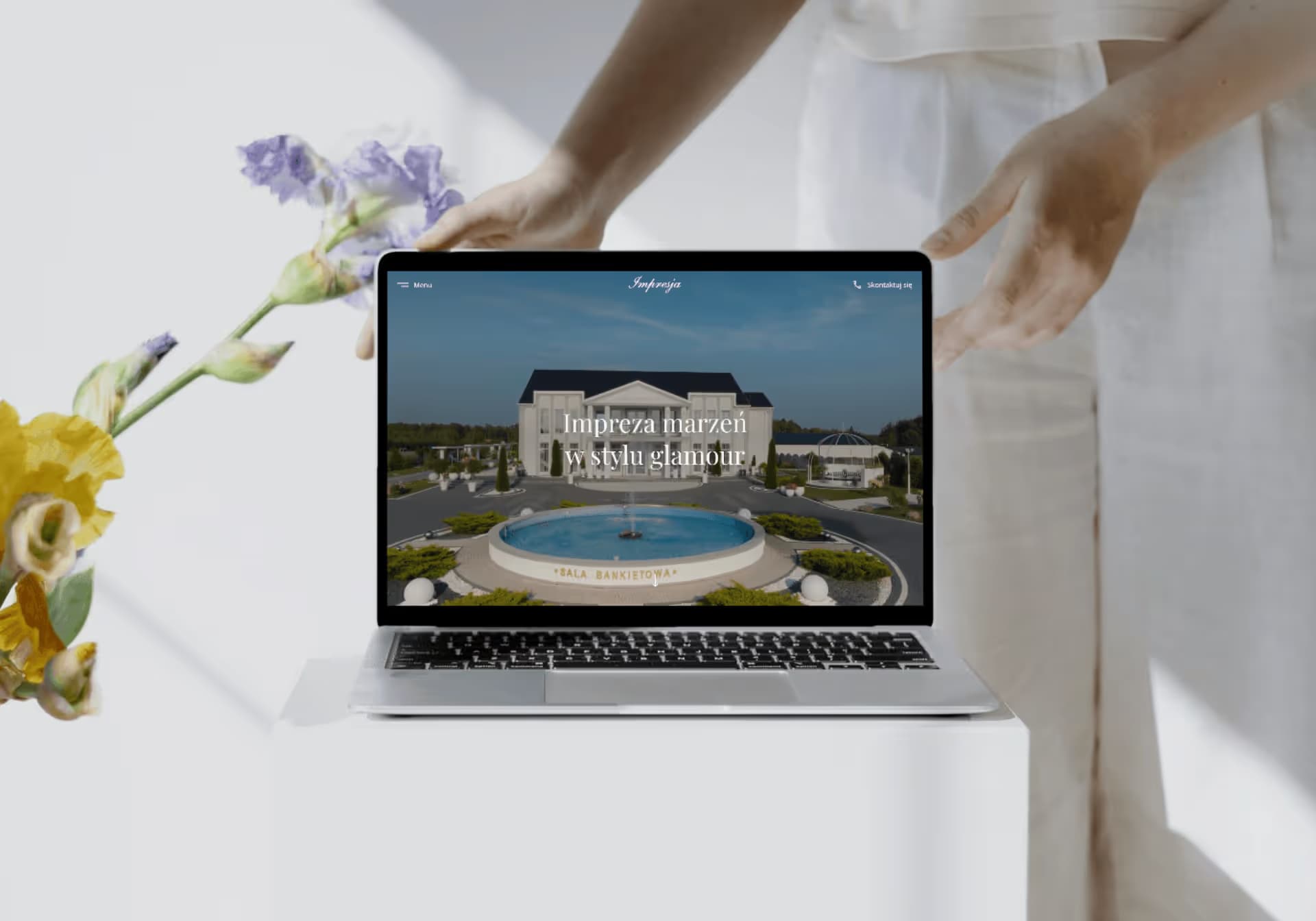
One project up close - the rest are waiting in the portfolio.
Pricing
What it costs.
You pay once for the build. No subscription for the software itself - the only running costs on your side are hosting and a domain.
Informational site
No editing panel. For sites whose content rarely changes - when the offer or the phone number needs updating, you write to me and I make the change directly in the code.
PLN 2,500
one-timeSite with a CMS panel
A simple panel in the browser: you swap out text and gallery photos yourself and add news and blog posts. For companies that refresh their offer from time to time.
fromPLN 4,000
one-timeSite with a bespoke system
The premium option. You assemble new pages from ready-made blocks, run the site in several languages and manage its whole structure without a developer.
fromPLN 6,000
one-timeMaintenance and hosting (SLA)
Server, backups, monitoring and updates on my side. You can also host it yourself.
fromPLN 300
monthlyFAQ
Before you ask.
The most common questions about price, contract, timing and who owns the code.
Let's build you a site that works.
A free 15-minute call. No sales jargon - just engineering and a concrete quote.